












Pakistan needs a more realistic conversation about cigarette smoke
Step into any busy street in Karachi during rush hour and the scene feels familiar. Cars inch forward, tea stalls are crowded, and cigarette smoke quietly blends into the air. It is present but rarely questioned, almost as if it is part of the background.
That quiet normalisation is where the conversation in Pakistan begins to miss the point.
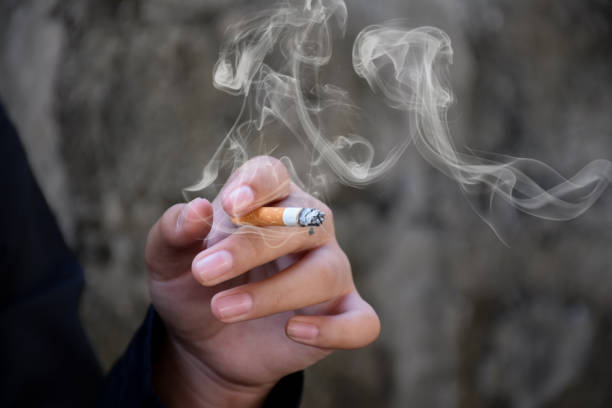
For years, smoking has been framed largely as a matter of personal choice or habit. But the public-health challenge is not just about the act itself. It is about what happens when a cigarette is lit. The moment combustion begins, a complex mix of toxic emissions is released, affecting both the smoker and those nearby.
Yet this is not where most conversations focus.
The scale of the issue demands more clarity. Pakistan is home to more than 17 million adult smokers, and the burden continues to rise. It is estimated that over 10% of all deaths in the country are linked to tobacco use. According to the Global Burden of Disease 2024, the annual death rate from smoking stands at 91.1 per 100,000 people, higher than regional and global averages.
These are not just numbers tied to individual behaviour. They reflect a broader, systemic public-health challenge. More importantly, the impact of smoke does not stop with the smoker. Nearly one in five tobacco-related deaths in Pakistan is attributed to secondhand smoke exposure. This means a significant share of harm is experienced by people who never made the choice to smoke at all.
In homes, workplaces, and public spaces, exposure becomes shared. This is why smoke-free environments remain one of the most effective and evidence-based tools available. They do not attempt to moralise behaviour. Instead, they focus on reducing exposure to what is widely understood to be the primary source of harm: smoke generated through combustion.
A more realistic conversation would start here. It would acknowledge that while quitting remains the most effective way to eliminate risk, the journey towards quitting is rarely immediate. Many smokers go through multiple attempts before successfully stopping. Ignoring this reality often leads to policy conversations that are well-intentioned but incomplete.
Globally, there is a growing recognition that reducing exposure to combustion can play a role in lowering overall harm, particularly for those who continue to smoke. This has led to more nuanced discussions around smoke-free policies, behavioural transitions, and the need for approaches grounded in how harm is actually created.
In Pakistan, however, this shift in conversation is still limited. The focus continues to stay on broad labels, while the central issue remains underexplored. The real driver of harm is not simply the presence of tobacco or nicotine in isolation, but the process of burning that produces toxic smoke.
A clearer understanding of this distinction can help shape more effective public-health responses. Pakistan does not need a softer conversation on smoking. It needs a more informed one. One that recognises where the greatest risks lie, how those risks extend beyond the individual, and what practical steps can reduce exposure at scale.
Because until the conversation shifts to combustion and smoke, it will continue to fall short of addressing the problem where it truly begins.